
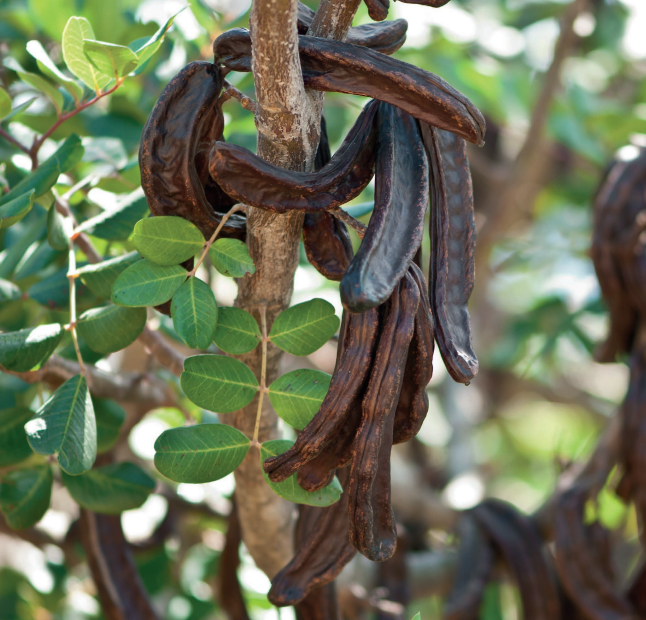
1. Genotype Selection – Traditional Portuguese Varieties
We identify and characterise traditional carob tree genotypes with potential for adaptation to the soil and climatic conditions of the Alentejo region.
- Development of national germplasm
- Selection of cold- and frost-tolerant varieties
- Basis for the establishment of experimental fields
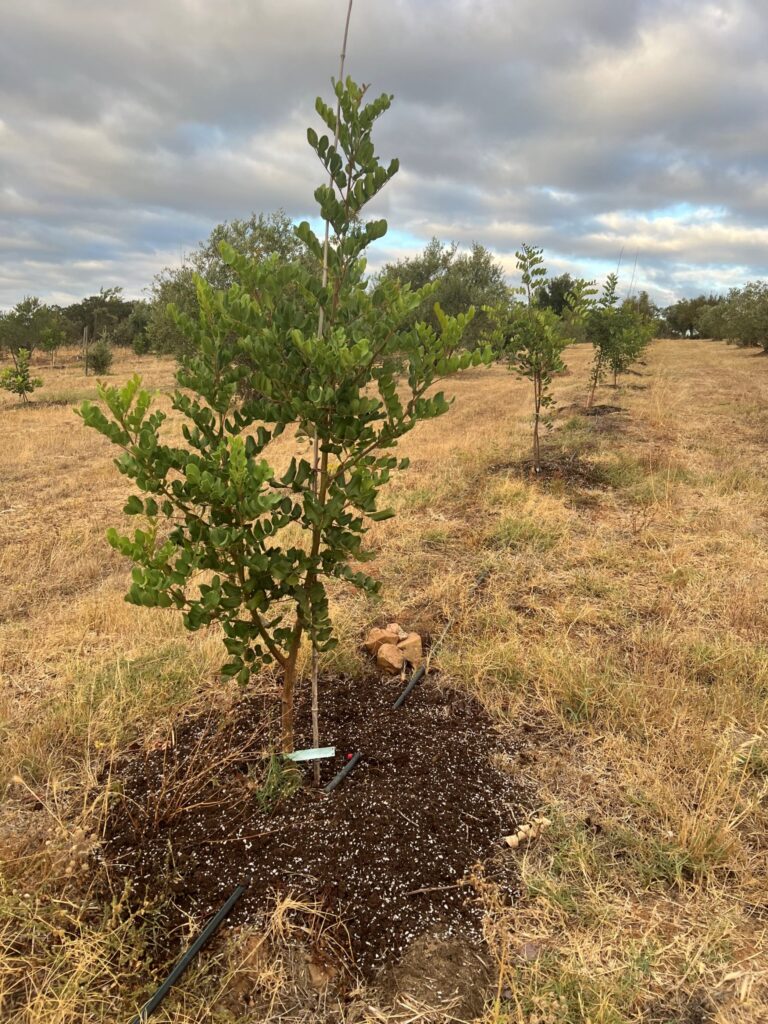
2. Establishment and Monitoring of Experimental Fields
We establish and monitor experimental fields to assess the agronomic performance of the selected genotypes under real-world conditions.
- Evaluation under real-world conditions
- Monitoring of plant development
- Data collection to support future selection
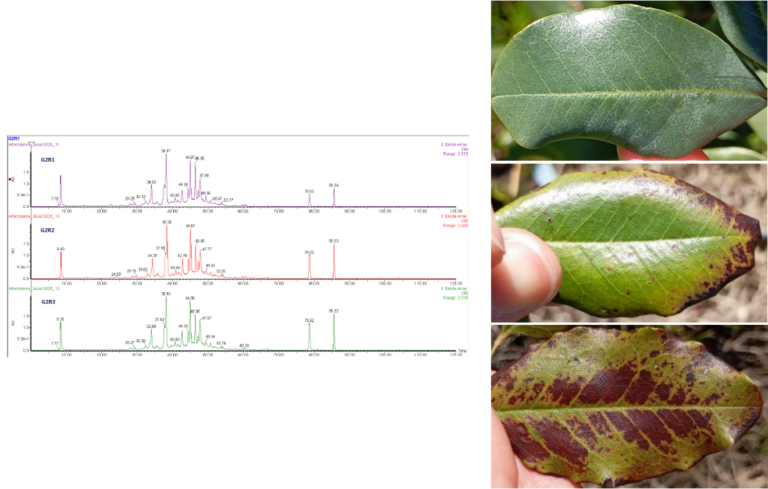
3. Identification of Biomarkers Associated with Tolerance
We study molecular and physiological indicators associated with cold and frost tolerance, with the aim of supporting the assisted selection of genotypes.
- Support for the selection of new genotypes
- Applied scientific knowledge
- Potential for transfer to other regions
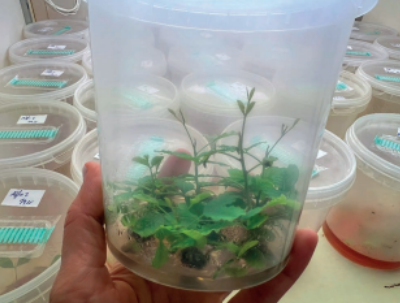
4. Establishment and In Vitro Propagation of Selected Genotypes
We develop micropropagation protocols to produce high-quality clonal plant material aligned with the project’s objectives.
- Production of clonal material to ensure uniformity in new orchards
- Phytosanitary assurance
- Acceleration and simplification of the propagation process
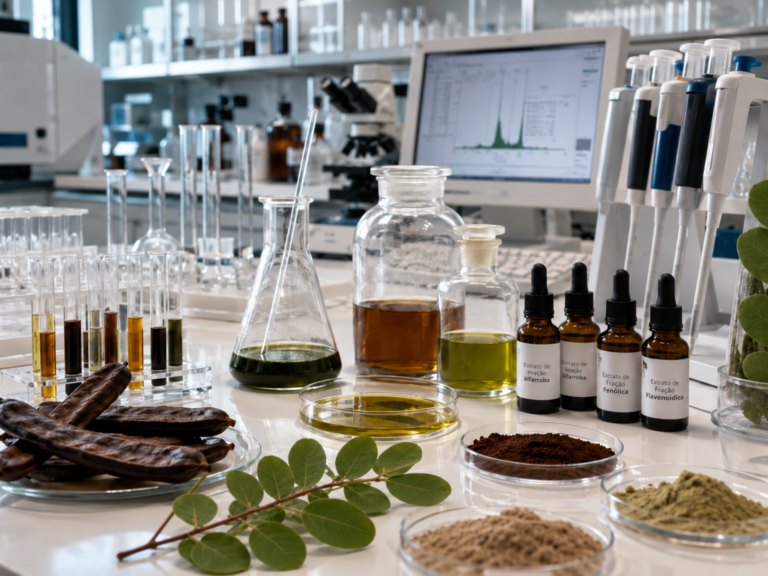
5. Exploring Metabolites and Biotechnological Development
We extract and characterise natural compounds from the carob tree with potential applications in biopesticides and other value-added uses.
- Potential applications in biopesticides
- By-product valorisation
- Biotechnological innovation
An Integrated Approach to Agricultural Sustainability
At ALCAROB, we combine science, experimentation, propagation and innovation to support more resilient agriculture adapted to the future of the Alentejo region.